
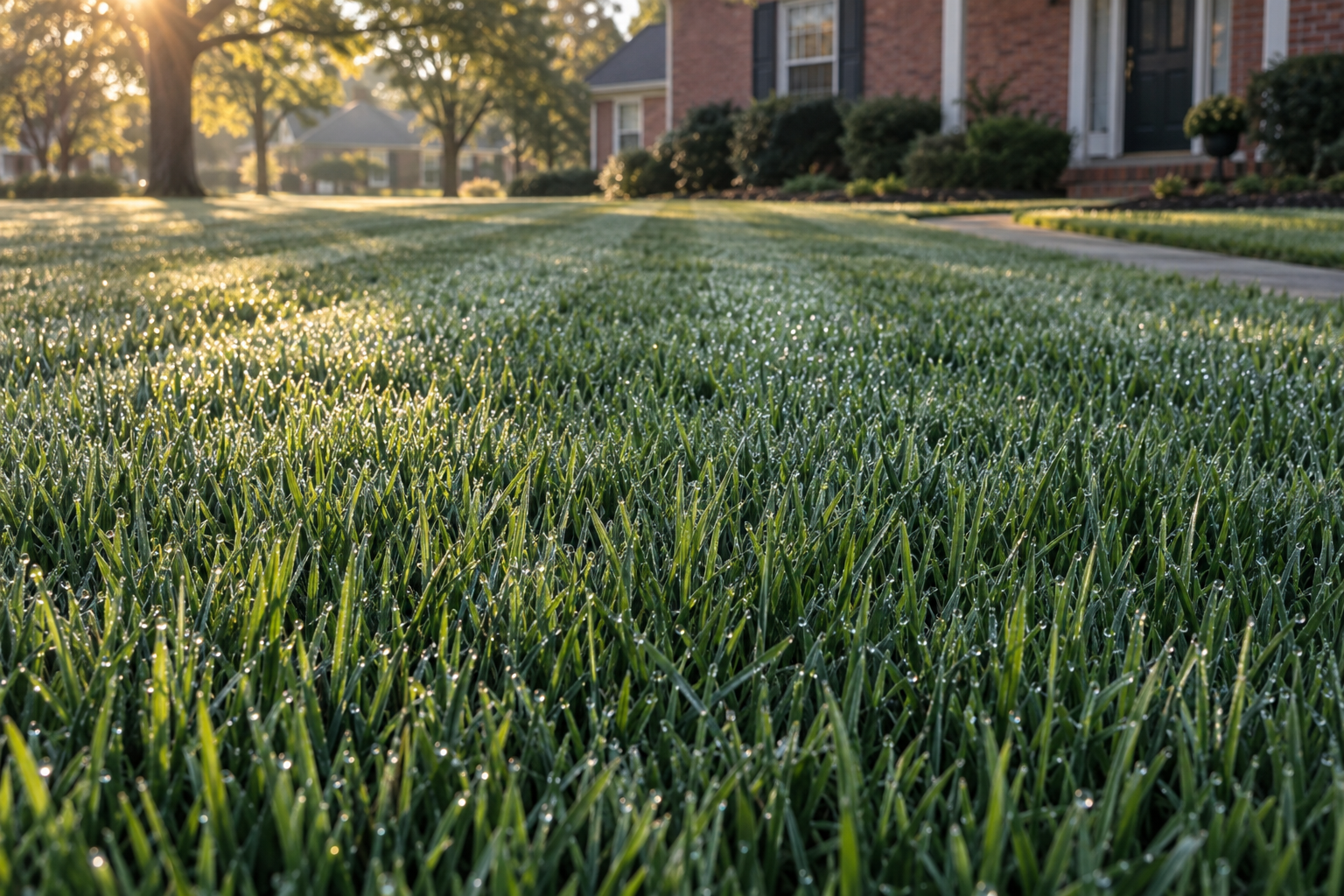
A Month-by-Month Lawn Care Schedule for Greensboro
Crabgrass preventer in late winter, grub control in early summer, then aeration, seed and the heavy feeding in fall: what your lawn needs, season by season.
Free, no-obligation estimates. We answer the phone or call back the same working day.
The Lawn Care Year at a Glance
A full treatment program runs about eight visits a year, one every four to six weeks, from the late-winter pre-emergent to the last feeding in fall.
What goes down on each visit changes with the season and with the grass. Tall fescue, a "cool-season grass", grows mostly in spring and fall; Bermuda and zoysia grow from late spring into summer and go "dormant", brown, over winter.
Here is what the lawn gets in each part of the year.
| When | The work | Why then |
|---|---|---|
| Late winter | Pre-emergent, the crabgrass preventer | Stops crabgrass seed before it sprouts |
| Spring green-up | Feeding for Bermuda and zoysia | About two weeks after the lawn greens up |
| Early summer | Grub control | Stops root damage below the surface |
| Summer heat | Heavy feeding held back | Fertilizer in the heat stresses the grass |
| Early fall | Fescue aeration, overseeding and feeding | Warm soil and little weed competition for new seed |
| Fall | Leaf removal | Leaves off the lawn, the beds and the gutters |
| Before dormancy | The last heavy feeding | Builds root strength for winter |
Late winter
Pre-emergent
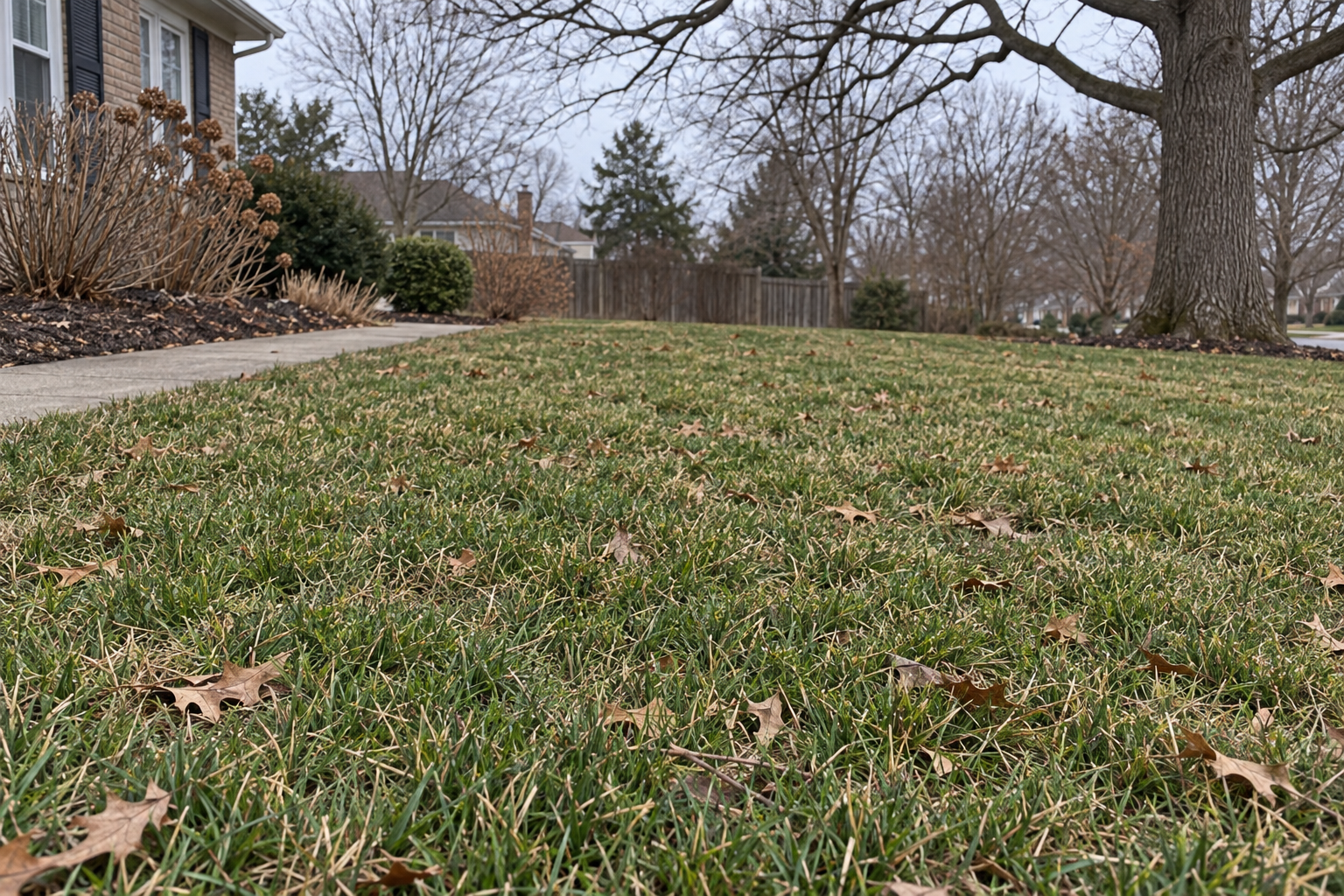
Late Winter: Pre-Emergent Weed Control
Late winter is when we put down "pre-emergent", the crabgrass preventer, so crabgrass seed is stopped before it ever sprouts.
A pre-emergent only works before the weeds come up, by keeping the seed from germinating, so it has to be on the lawn ahead of them. That is why a seasonal treatment program starts with it. Weeds that still come through later are spot-treated with a "post-emergent", the weed spray.
weed control in GreensboroSpring and early fall
Feeding
Feeding Times by Grass Type
Fescue is fed in early fall, while Bermuda and zoysia are fed in spring, about two weeks after they green up.
Fertilizer timing follows the grass type, so the feeding lands while that grass is growing. That is why we name the grass before we plan a single round.
Here is when each lawn grass gets fed.
| Grass | Family | Grows most | When it is fed |
|---|---|---|---|
| Tall fescue | Cool-season | Spring and fall | Early fall; heavy nitrogen held back in summer |
| Bermuda | Warm-season | Late spring into summer | Spring, about two weeks after green-up |
| Zoysia | Warm-season | Late spring into summer | Spring, about two weeks after green-up |
Bermuda's feeding and weed control timing is laid out in the NC State Extension, Bermudagrass Lawn Maintenance Calendar.
Early summer
Grub control
Early Summer: Grub Control
Grub control goes down in early summer to stop grubs damaging the roots below the surface.
Grubs feed under the turf, out of sight, so the damage is easy to miss until the grass starts to thin; by then the roots are already eaten. The same stretch is when we hold back heavy fertilizer, because feeding in the heat stresses the grass.
Rather not keep track of the calendar?
We time each visit to your grass and the season, so every round goes down when it should. A full lawn care program is usually quoted as an annual contract billed in level monthly amounts.
Free, no-obligation estimates. We quote the whole job before we start.
Fall: Aeration, Overseeding and Leaves
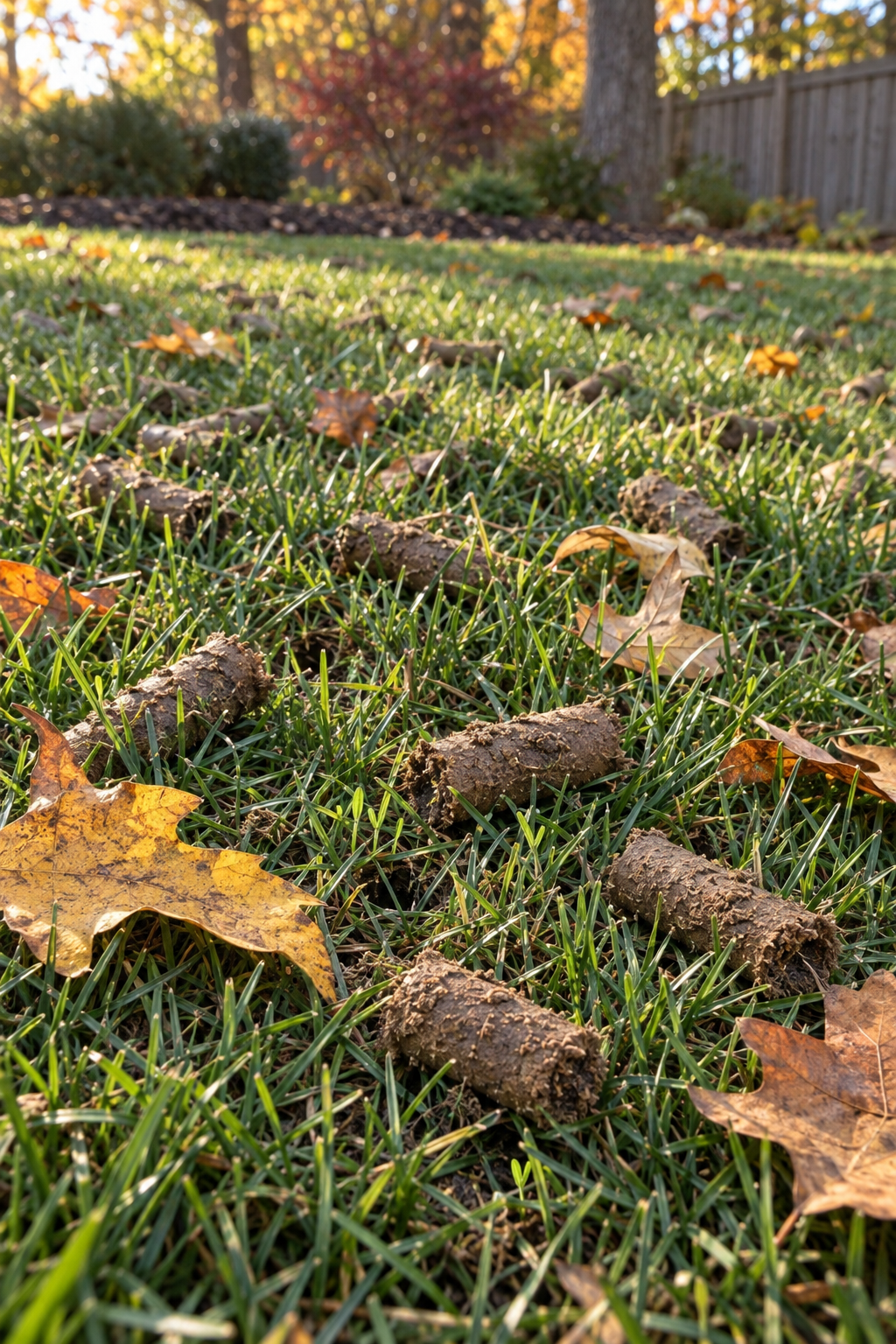
Fall is the busy season: fescue gets core aeration and overseeding, the leaves come off, and the heavy feeding goes down before the lawn goes dormant.
Fall brings three jobs to a fescue lawn.
- "Core aeration" and "overseeding" in early fall, when the soil is still warm and weed competition is low, the best time to seed a cool-season grass.
- Leaf removal: raking, bagging and hauling the leaves off the lawn, out of the beds and out of the gutters.
- The last round before dormancy, a heavy feeding that builds root strength for winter.
Fescue's month-by-month seeding, feeding and aeration timing is set out in the NC State Extension, Tall Fescue Lawn Maintenance Calendar.
Order of Lawn Care Work
Weeds are sprayed first, then the lawn is aerated, overseeded and fed, each step making room for the next.
A fall lawn renovation goes in four steps.
-
Spray the weeds
The lawn is sprayed for weeds before anything else, so the new seedlings have room to sprout.
-
Core aerate
Pulling soil plugs loosens compacted soil and opens the surface for seed.
-
Overseed
New seed goes into the loosened soil, where it can germinate.
-
Feed
Fertilizer goes down after the seed, feeding the existing grass and the new seedlings.
Should You Fertilize in Summer?
You should hold off on heavy feeding in summer, because fertilizer in the hot months stresses the grass.
That goes double for fescue, whose heavy nitrogen is held back through summer and saved for the early fall feeding. We pick the feeding back up when the season turns.
What our neighbors say
These are our Google reviews, in the reviewers' own words.
Ivan was so helpful! Would definitely recommend to anyone who needs services!
I could not be happier with Cut & Grow LLC. They are professional and their work is first rate. I recommend that you give them a try, I think you will be glad you did.
Enjoyed my experience with the the Cut&Grow work crew and management. A diligent and conscientious team that rejuvenated our recently purchased residential property. Overgrown weeds, neglected bushes, and an abundance of poison ivy was transformed into a tranquil environment. Professional, cooperative, and thorough.
Get every season's work done on time
Call for a free estimate. We look at your grass, then quote the whole year's work before we start, with no surprise charges after.
Open Monday to Saturday. Calls outside those hours go to voicemail and we return them the next working morning.
- Free, no-obligation estimates
- We show up when we say we will
- We clean up when the work is done