Lawn Fertilizing in Greensboro, Timed to the Grass
Slow-release feeding on your grass's own calendar, for home lawns and commercial grounds in Greensboro and the towns around it.
Free, no-obligation estimates. We answer the phone or call back the same working day.
Lawn Fertilizing in Greensboro
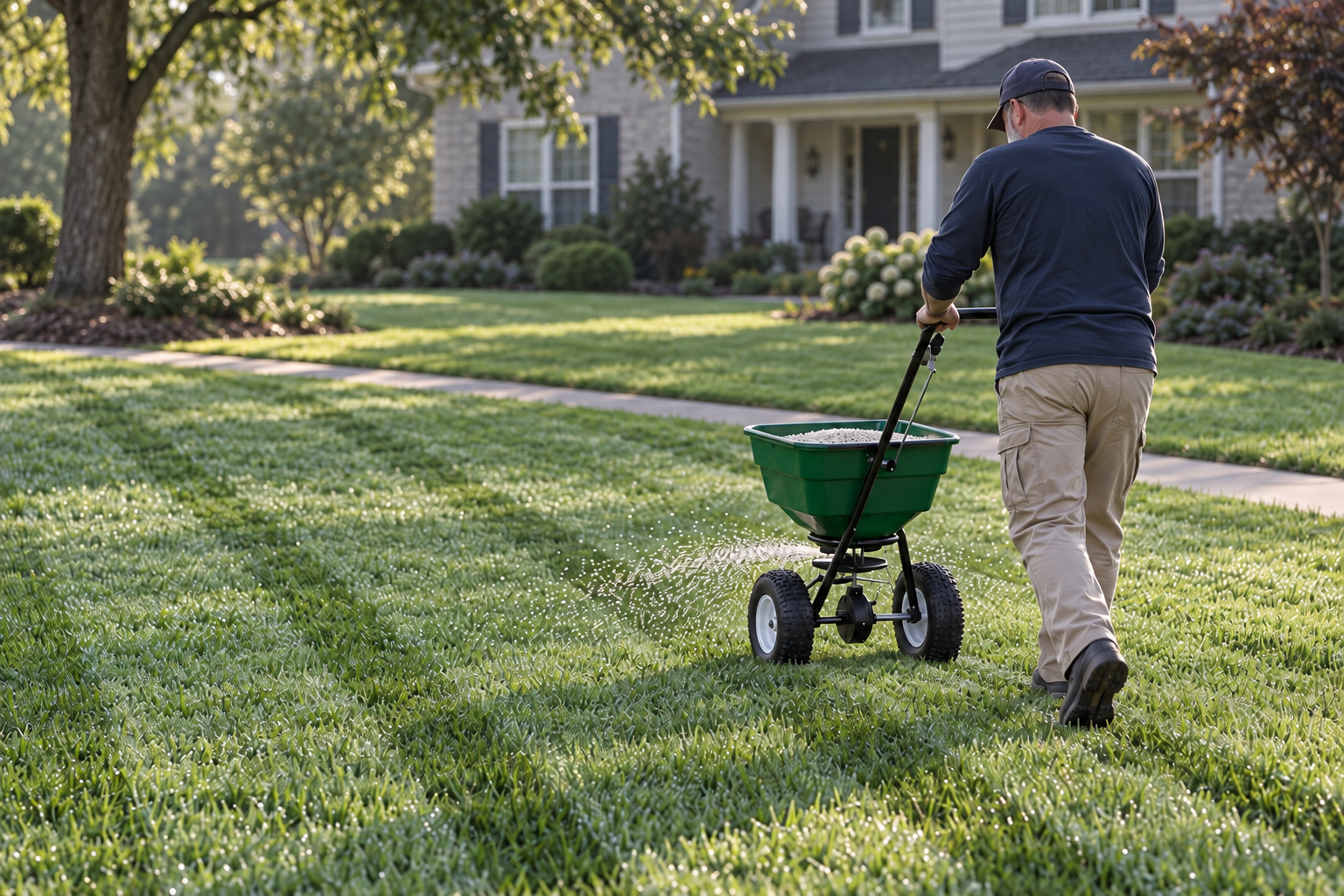
Lawn fertilizing spreads a slow-release granular fertilizer evenly across the turf, on a schedule set by the type of grass growing in it.
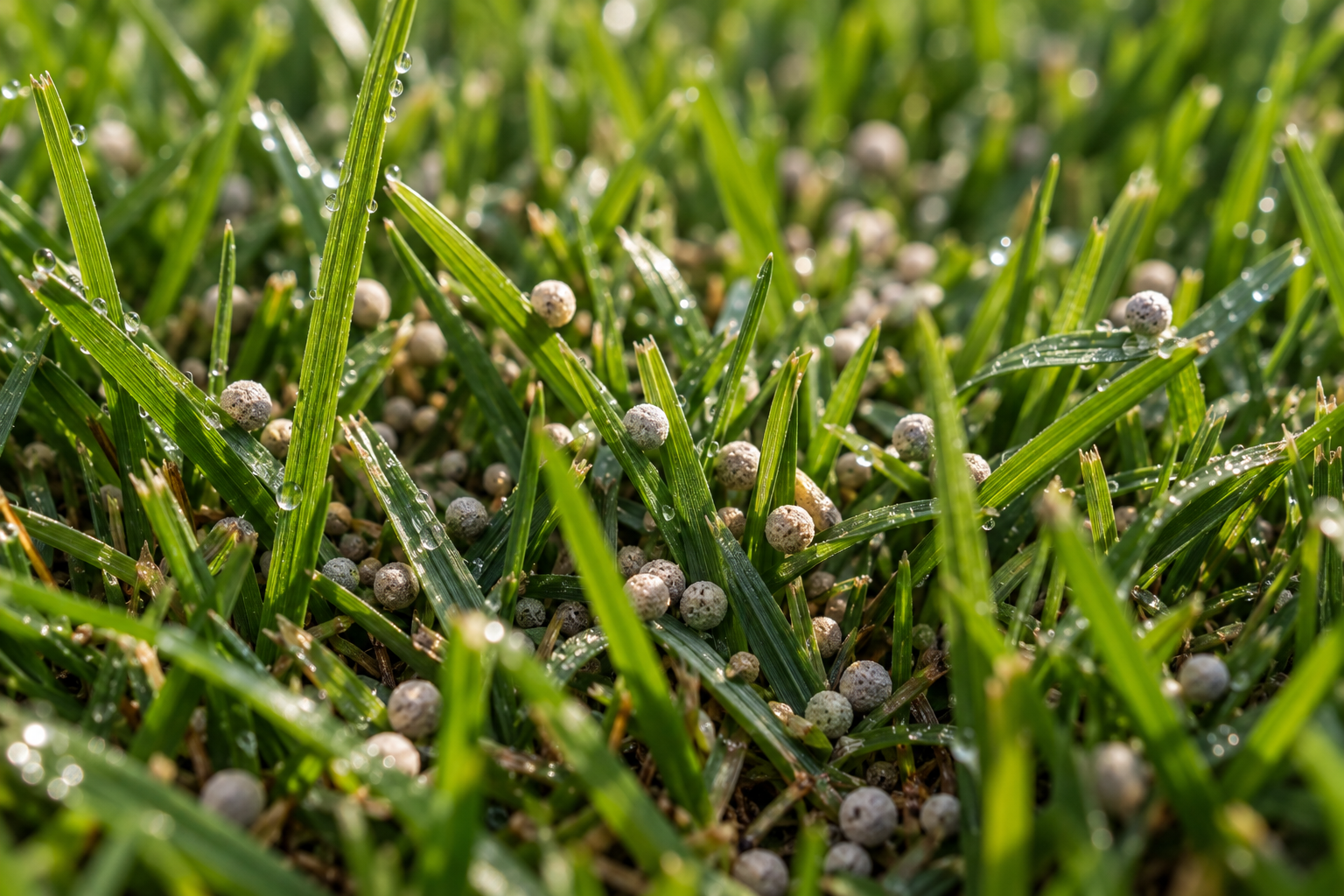
We use "slow-release fertilization", what most people call a lawn feeding, because it feeds the turf gradually and holds the color between visits. The granules go down in spring and fall, and the grass type decides which of those rounds does the heavy lifting.
Cool-season fescue and warm-season Bermuda or zoysia are fed at different times of year, so on a Greensboro lawn we identify the grass first and build the program around it.
Inside a Lawn Feeding Program
A program spreads slow-release fertilizer in spring and fall, adds lime where a soil test calls for it, and finishes with a heavier feeding before the grass goes dormant.
The rounds of a feeding program, in season order, are these.
- Spring
A slow-release "fertilization" round as the lawn wakes up, timed to the grass type rather than to a date.
- Where the soil calls for it
A "limestone application", liming, goes down where a soil test shows the pH is off, so the grass and any new seedlings can use what they are fed.
- Fall
A second slow-release round in fall, the main feeding of the year for a cool-season fescue lawn.
- Before dormancy
The last round is a heavier feeding, put down before the grass goes "dormant" to build root strength through the winter.
After every round we leave a lawn flag and a service summary, so you know what went down and when. Lime and fertilizer needs come from a soil test, which NC Department of Agriculture, Agronomic Services Soil Testing runs for North Carolina lawns.
Feeding Fescue in Fall and Bermuda in Spring
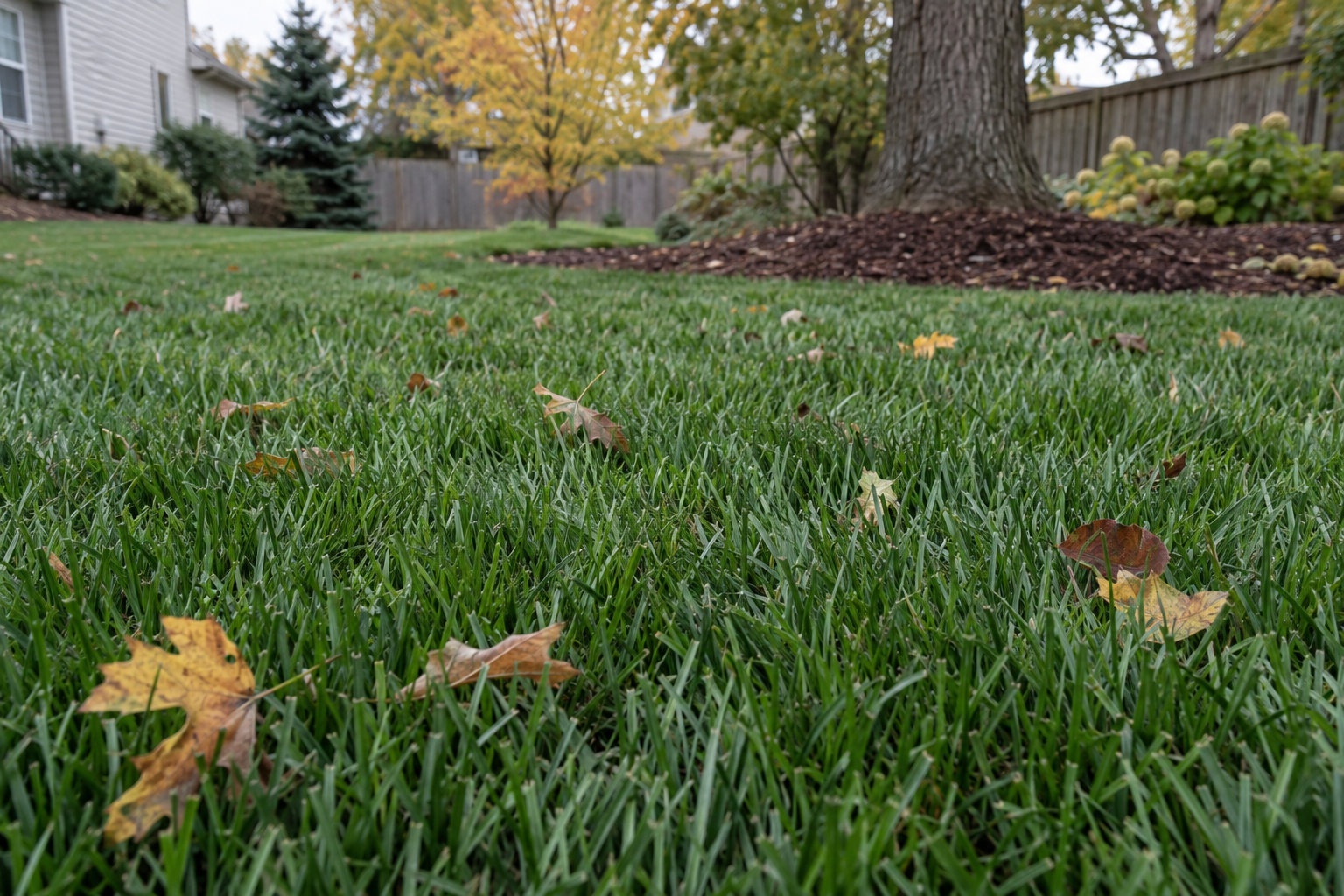
Cool-season fescue is fed mostly in fall, and warm-season Bermuda and zoysia are fed in spring, about two weeks after they green up.
Fescue
"Cool-season grasses"
On a fescue lawn the calendar works around the summer heat.
- Main feeding in early fall, when the grass is growing hardest.
- Heavy nitrogen held back through the hot summer months, when a feeding stresses the grass.
Bermuda and zoysia
"Warm-season grasses"
These lawns go brown in winter and green up late in spring.
- Main feeding in spring, about two weeks after the lawn greens up.
- No feeding while the grass is tan and dormant through winter.
The month-by-month timing for a fescue lawn is laid out in the NC State Extension, Tall Fescue Lawn Maintenance Calendar.
lawn care scheduleFertilizing Estimates Around Greensboro
We quote fertilizing per round or as a yearly program, for home lawns and commercial grounds in Greensboro and the towns around it.
A full lawn care program is usually quoted as an annual contract billed in level monthly amounts, so you know the cost of the year up front. The number itself comes from the lawn: lot size, turf condition, slope, shade, access and bed area all shape a plan and its scope. We look the lawn over, then quote the whole program before we start, with no surprise charges after.
service area around GreensboroFree, no-obligation estimates. The quote comes after the call, once we have seen the lawn.
Watering After Fertilizing
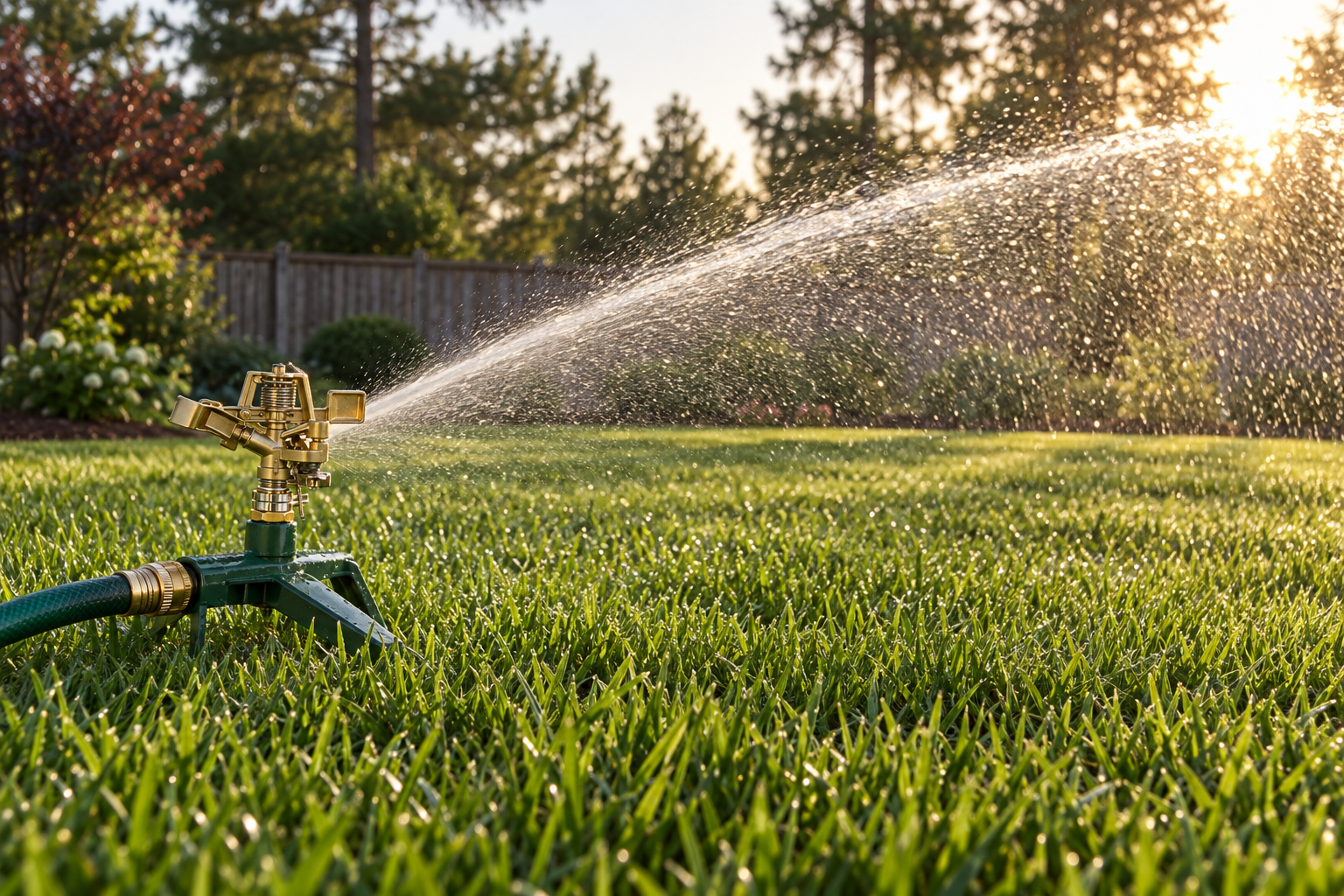
Watering after a feeding and mowing at the recommended height are what carry the fertilizer down to the roots.
A watering after the round moves the granules off the blades and into the soil, where the roots can reach them. Mowing at the right height for your grass keeps the turf thick enough to use what it is fed.
On our side, a professional program avoids the over-application and uneven coverage that leave a lawn patchy. Each round goes down at a measured rate, in straight overlapping passes.
How a feeding program gets started
From the first call to the first round, it goes in four steps.
-
Call us
Tell us the address and what the lawn is doing. We answer the phone or call back the same working day.
-
We look at the lawn
We identify the grass type and check the turf, then quote the whole program before we start.
-
We feed on schedule
Each round goes down when your grass needs it, and we show up when we say we will.
-
You get the summary
After every round we leave a lawn flag and a service summary of what went down.
What our neighbors say
These are our Google reviews, in the reviewers' own words.
Ivan was so helpful! Would definitely recommend to anyone who needs services!
I could not be happier with Cut & Grow LLC. They are professional and their work is first rate. I recommend that you give them a try, I think you will be glad you did.
Enjoyed my experience with the the Cut&Grow work crew and management. A diligent and conscientious team that rejuvenated our recently purchased residential property. Overgrown weeds, neglected bushes, and an abundance of poison ivy was transformed into a tranquil environment. Professional, cooperative, and thorough.
- Free, no-obligation estimates
- The whole program quoted before we start
- We show up when we say we will
- We clean up when the work is done
What Else Goes With Feeding
Weeds and compacted soil both limit how much good a feeding does, so two other jobs often ride along with a program.
-
Weeds That Steal the Feeding
Weeds left in the lawn soak up fertilizer before it reaches the grass roots. That is why weed control, a "pre-emergent" before weeds come up and spot treatment for the ones that do, goes hand in hand with feeding.
-
Aeration Before a Feeding
Aeration lets nutrients and oxygen reach deeper into the soil, so a feeding put down after it works better. "Core aeration", plugging the lawn, pulls soil plugs to relieve compaction and is usually paired with overseeding.
Fertilizing questions
Short answers to what neighbors ask before a first feeding.
What is the best way to fertilize my lawn?
The best way is to feed on the calendar your grass keeps: cool-season fescue in early fall, warm-season Bermuda and zoysia in spring, about two weeks after they green up. Slow-release granular fertilizer goes down evenly, and heavy nitrogen is held back through the hot summer months.
Is 10-10-10 fertilizer good for grass?
The timing and the release matter more than the numbers on the bag. We use slow-release granular fertilizer, which feeds the turf gradually and holds color between visits, and we add lime only where a soil test calls for it.
Do you water grass immediately after fertilizing?
Yes, watering after a feeding carries the fertilizer down to the roots, and with mowing at the recommended height it is what makes a feeding work. Children and pets stay off until the lawn dries, usually a couple of hours on a dry day.
Ready for a lawn fed on its own schedule?
Call for a free estimate. We look the lawn over and quote the whole program before we start.
Open Monday to Saturday. Calls outside those hours go to voicemail and we return them the next working morning.
- Free, no-obligation estimates
- No surprise charges after we start
- We answer or call back the same working day